Valorant Champions Shanghai, what Day 2 of the group stage revealed
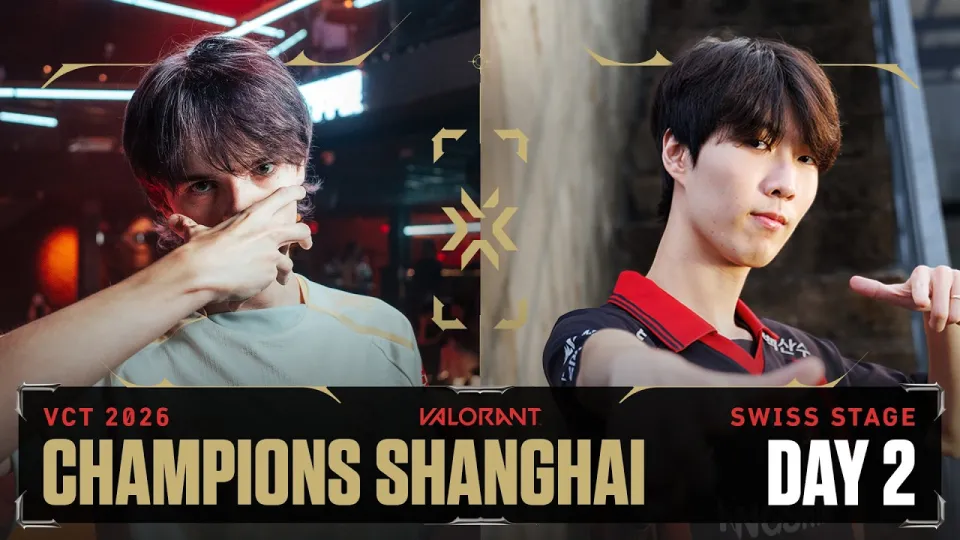
Video: VALORANT Champions Shanghai — Group Stage — Day 2
You can order the same kind of articles for your own video to boost it on YouTube and Google. Just message the Telegram bot @sat_sit_bot. Articles with your video embedded are written and posted by the bot itself — on popular topical sites (no ads). Try it free: 50 articles on us.
· based on the channel VALORANT Champions Tour
Key takeaways
- Valorant Champions Shanghai runs from September 24 to October 18 and crowns the 2026 world champion.
- Sixteen teams qualified from four regions: Americas, CN, EMEA and Pacific.
- Day 2 of the group stage was published by the VALORANT Champions Tour channel on September 25.
- The 2026 season opened with two different Masters winners, so Shanghai is the first event where both meet in one bracket.
- Group stage matches are best-of-three; the broadcast runs long, with single days often passing the three-hour mark.
Valorant Champions Shanghai is the 2026 world championship of the VALORANT Champions Tour, and Day 2 of the group stage decided which of the sixteen qualified teams kept control of their own destiny in the opening round-robin. The broadcast, published by the VALORANT Champions Tour channel on September 25, packed a full slate of best-of-three series into a single stream, with results, interviews and analyst segments running back to back. Official updates, brackets and schedule changes land first on the VALORANT Esports X account, which is the fastest way to follow the event live.
What the Champions Shanghai format actually asks of teams
Valorant Champions Shanghai gathers sixteen teams from four regions — Americas, CN, EMEA and Pacific — and runs from September 24 to October 18. The group stage is a round-robin of best-of-three series, which means a single bad map does not eliminate anyone, but a 0-2 start puts a team one loss away from the elimination match. That structure is why Day 2 matters more than its name suggests: teams that dropped their opener are already playing with the bracket behind them, while 1-0 squads are trying to bank a second win before the crossover into the playoff seeding. Best-of-three also rewards map pool depth over raw aim, because a team that bans badly can lose a series without ever being out-fragged.
Why Day 2 felt like a speedrun
The most repeated reaction in the comments was that Day 2 played out like a speedrun, and the schedule explains it. With sixteen teams and a compressed group stage, broadcast days stack multiple series back to back, and when a series ends 2-0 the next one starts early. Short series compress everything downstream: analyst desk segments get trimmed, the pick-and-ban phase feels rushed, and viewers who tuned in for one specific matchup can miss it entirely if they arrived on the original timetable. For anyone catching the VOD rather than the live stream, that compression is actually an advantage — the full day fits into a single sitting, and the timestamped spoiler-blocker comment pinned at the top of the chat exists precisely so people can navigate the results without having the scoreline ruined before they press play.
The CN region debate, and what it is really about
A large share of the Day 2 discussion was not about individual rounds but about regional slots. Several viewers argued that CN's four slots would be better merged into Pacific, and others went further, calling the region's presence at international events wasted space. The frustration usually traces back to two things: lopsided scorelines that look like mismatches on paper, and in-game communication clips that get judged harshly by an audience used to EMEA and Pacific shot-calling. It is worth separating the noise from the signal. CN is a young international region with its own league structure, and slot allocation is a long-term investment decision by the publisher, not a reward for immediate results — the same argument that was made about Pacific and Americas expansion years earlier. Judging an entire region on one group stage day is the same mistake people made about every new region before it produced a champion.
Reading a lopsided series without overreacting
Blowout maps are the least informative games to draw conclusions from, and Day 2 had its share. A 13-3 scoreline usually reflects one of four things, in roughly this order of likelihood:
- A pistol round snowball — losing both pistols on a map hands the opponent a four-round cushion before any real execute happens.
- A map-pool mismatch — one team is playing its comfort pick while the other is on a map it only practiced as a counter.
- Economy collapse — a couple of force-buy losses turn into a permanent buy disadvantage, and the scoreboard stops reflecting individual skill.
- Genuine tier gap — the rarest explanation, and the one viewers default to first.
For pick'em players, the practical lesson from Day 2 is the same one the chat kept repeating: regional loyalty is a bad predictor in the group stage, and results from a single day should not be extrapolated into playoff predictions. Group stage upsets are common precisely because best-of-three reduces the sample size.
Production details that shaped the viewing experience
Two production choices dominated the feedback on this broadcast. The first is interview translation: answers delivered in a few seconds on stage expand into a much longer segment once the interpreter finishes, which stretches the gap between maps and slows the pacing of an already long day. The second is the volume of content packed into one stream — with multiple series, desk analysis and player segments, a single Day 2 VOD covers several hours, which is why timestamp navigation matters more here than in a regular season broadcast. Neither issue is unique to Shanghai, but both are more visible when the schedule is this dense.
How to watch the rest of the group stage efficiently
If you are following Champions Shanghai through VODs rather than live, a few habits make the event far easier to track. Check the official schedule before each day and note which series actually affect the standings, since dead rubbers become common in the final round of a group. Watch the pistol rounds and the first two gun rounds of each half — in best-of-three VALORANT, those six rounds predict the map result more reliably than anything that happens afterward. Skip the desk segments on the first pass and return to them only for the series you care about. And keep one source of truth for scores: bracket sites and social posts update faster than a paused VOD, so decide in advance whether you want to be spoiled or not. Full schedule details, bracket updates and announcements are published through the official channels, including VALORANT Esports on X, Facebook, Instagram, TikTok and Twitch.
What Day 2 means for the rest of Champions Shanghai
Day 2 narrowed the group stage picture without settling it: teams that started 2-0 are now one win from locking a playoff seed, while 0-2 squads are effectively in a single-elimination mindset for the rest of the round-robin. The 2026 season context makes that pressure sharper — two different Masters winners already lifted trophies this year, so Shanghai is the first event where the full field of contenders meets in one bracket, and no region enters with a proven answer. The group stage rewards consistency over peak performance, which is exactly why the fast, lopsided days matter less than the teams that survive them. For the full run of matches, desk analysis and post-game interviews, the VALORANT Champions Tour channel is publishing every day of the event, and the official X account remains the fastest place to confirm results, schedule changes and bracket updates before the next broadcast starts.
Questions & answers
How many teams play at Valorant Champions Shanghai?
Sixteen teams qualified for the event, drawn from four regions: Americas, CN, EMEA and Pacific. They are split into groups for a round-robin stage played as best-of-three series, with the top teams advancing to the playoff bracket. The tournament runs from September 24 to October 18.
Why did Day 2 of the group stage feel so short?
Group stage broadcasts stack several best-of-three series into one day, and 2-0 results end series early, which pulls every following match forward. That compression makes the day feel like a speedrun and can throw off viewers who planned around the original start times. Watching the VOD with timestamps is the simplest fix.
Does CN deserve four slots at international VALORANT events?
Slot allocation is a long-term investment by the publisher in a region with its own league, not a reward for immediate results. Judging a region on one group stage day repeats a mistake that was made about Pacific and Americas expansion before those regions produced title contenders. Stronger results will change the argument faster than forum posts will.
How should I read a 13-3 map in the group stage?
Most blowouts come from pistol-round snowballs, map-pool mismatches or economy collapse rather than a real skill gap. In best-of-three VALORANT the sample is small, so a single lopsided map says little about how two teams would perform in a longer series. Look at the pistol rounds and the first gun rounds of each half instead of the final score.
Source: VALORANT Champions Shanghai — Group Stage — Day 2 · Markdown version